Wednesday, January 30, 2008

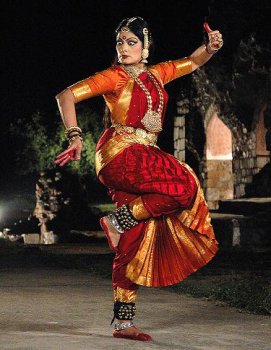
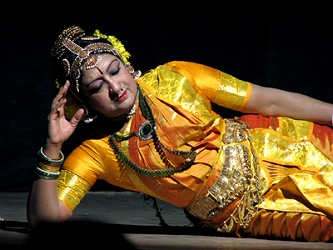
Yin Yang By Lavanya Raghuraman.

Here is a reveiw by Rupa Srikanth on the presentation by Lavanya Raghuraman.

The ‘Yin and the Yang’ deals with an abstract concept on the nature of opposites that are in fact interdependent and related in a primal way.

This theory was extended to Indian concepts and myths such as the Surya and Chandra (sun and moon), Purusha and Prakriti (male and female), and Palai and Solai (desert and fertile land) through Tamil literature, Carnatic music and Bharatanatyam in the ‘Alchemy of Opposites,’ choreographed by Shantha and V.P.Dhananjayan and presented by their vibrant and talented student, Lavanya Raghuraman.

Read More

Saturday, January 26, 2008

Sheejith Krishna : Pace, a trifle slow


Sheejith Krishna is one of the fine dancers produced by Kalakshetra and has been seen in numerous roles in the institution’s group productions. His solo Bharatanatyam performance as part of The Music Academy Dance Festival stuck to the traditio nal pattern of his alma mater, in being unostentatious in dance, music or costume.

Sheejith began with the Siva Panchakshara stuti, ‘Nagendra Haraya Trilochanaya.’

After the plethora of hard hitting thandava compositions one is repeatedly treated to, his quiet approach was refreshing. The varnam, T.R.Subramaniam’s “Angayarkanni Neeye Arulvaye” in Mishra Sivaranjani, continued in the quiet vein. Adequately rendered, it did not however, seem to gain momentum.

A certain placidity of bhava and a lack of variety in the pace of the nritta kept the varnam from making a memorable statement.

Natural flow

To have a varnam without fireworks might be considered a statement in itself. However, there is a natural ebb and flow in the margam pattern, and the dancer can choose from a complementary set of songs. By following up this kind of varnam with a slow Kshetragna padam, “Manchi Dinamu,” the dancer set himself too daunting a task. To carry it off, he needed to have a much deeper command over bhava.

Next he chose a kirtanam in praise of Siva, “Ananda Natana Prakasam,” in Kedaram. Since this too was taken at a slow pace, it did not help the recital pick up.

To the dancer’s credit, it must be noted that it is difficult to maintain a high standard of nritta for such a long period at a slow pace. This Sheejith did, but the effort did not translate into a successful programme, because the spark was missing.

Sheejith ended with the by now well-known tillana in Nata Bhairavi composed by Veenai Krishnamachari, dedicated to Guru Rukmini Devi Arundale. His little off-beat touches in the least expected places, which added a bit of spirit to the performance, held out the message that with a performance plan better suited to his personality, Sheejith would be a dancer worth watching.

Hari Padman provided diligent nattuvangam. Deepu Nair’s singing was melodious but he slipped up at times in his Sanskrit and Telugu pronunciation.

Ramesh Babu on the mridangam, Sashidhar on the flute and Anantha Narayanan on the veena made up an experienced musical team.

Source: The Hindu

Thursday, January 24, 2008

Pure Balasaraswati style from Sushma Ranganathan


Bharathanatyam, as we know it today, has evolved so much, that many contemporary dancers can only have heard or read about the way it was performed in the early days of its transition onto the stage. With the accent so strongly nowadays on presentati on, lighting, etc, one doesn’t often get to see an old world, “no-frills” performance. Sushama Ranganathan’s performance for the Brahma Gana Sabha was one such. Daughter and disciple of Nandini Ramani, who is herself a student of Balasaraswati, Sushama is petite, slender and light on her feet. Her performance was completely without pretension and steeped in the traditional style she follows.
She chose to do the Thanjavur quartet varnam “Mohamana en meedhu” as her central piece. The nritta sequences were performed with a very high degree of precision and competence. Sushama’s interpretation of the line “nagarigamana thirunagaril” created a wholesome picture of sophistication. With her neat adavus and sound technique, a little less restraint in her abhinaya would enhance her performance even more. An unusual feature of the varnam was that the singers continued to sing during the jathis as well. Post varnam, Sushama danced to the padham, “nidhiraiyil, swapnathil” where the nayika narrates her dream to her sakhi, and then to a quaint kurathi song “kudisai vaithu.” The Sankarabharanam tillana was another composition of the Thanjavur Quartet. The korvais composed in the various nadais by nattuvanar K. Ganesan were delightful. Once again, Sushama was in effortless sync with the rhythm.
The well-synchronised and elaborate orchestra had K. Ramaiah wielding the cymbals. He was assisted by Suresh, himself a dancer. Vocal support was shared by Sarayu Srinivasan and Sri Balaji. Venkat Subramanian provided the percussion support, while the flute was played by Ramanna.

Source:The Hindu

Wednesday, January 23, 2008

Prof C V Chandrasekhar thrills

A review by Srinivasa zGopalan in Chennaionline

It was a moment of enthusiasm and thrill at Music Academy to watch the 73-year-young Bharatanatyam exponent dance for more than one hour. Trained at the internationally renowned Kalakshetra School in Chennai under the tutelage and mentorship of Rukmini Devi Arundale, and served the Banaras Hindu University and M S University of Baroda and retired as the head and dean of the Faculty of Performing Arts of M S University of Baroda, Prof C V Chandrasekhar is one of the India's outstanding senior gurus and dancers.

Music Academy held a week-long dance festival and this lecture-demonstration was one of the very well-attended sessions. The Professor spoke of how important it is to use Deha Mudras - body movements - and not just hand gestures and facial expressions for Nritthyam. He elaborated in his lecture how dancers have to enunciate the rasaas more and not do too much of story telling for every item. He stressed how important music was for dance.

After the enlightening speech came the excellent presentation of a 'Guru Vandhanam' followed by a 45-minute Dhanyasi Varnam where he exhibited skill and mastery in every step.

Jaya Chandrasekharan, in spite of her age, handled nattuvaangam with clarity. The vocal support by Hariprasadh was extremely suitable for the dance. There was a perfect sync between the voice and the dancer's expressions. Probably this perfect unison is the most important factor that one expects in a good Nrittham.

Prof Chandrasekhar elaborated the subtelities of naatyam not only in his speech before the dance but established 'The Way' to dance, in his soul-stirring performance. The huge crowd at Music Academy filled with not only rasikas, dancers and students but many musicians to learn from the guru was heart warming. Many on lookers were seen in tears to watch the beauty of the ‘Rudhra Thandavam’ performed in Ragam Shankara.

There was standing ovation for the excellent art and the crowd roared in applause for more than 15 minutes. This world-acclaimed dancer, choreographer, researcher, musician, academician, composer and teacher of Bharatanatyam has been performing for the past six decades in India and all over the globe and is invited by many dancers the world over to teach and choreograph.

It was a memorable day filled with excellent thoughts of this exemplary ideal from whom every dancer will learn, cherish and follow.

Monday, January 21, 2008

Narthaki's review on Geeta Chandra's Shakthi

- Pandithar Shivakumar Perumal, Pune - Pandithar Shivakumar Perumal, Pune writes in his review in the Narthaki

The Stein Auditorium at the India Habitat Centre is probably the finest address where art is tastefully presented in India today. Time and again, it has been the venue for the finest of dance and music recitals. As part of the recently convened World Congress on Psychology and Spirituality, the auditorium was the venue of a charged performance by dancer Geeta Chandran, in a classical Bharatanatyam recital titled 'Shakti' on January 5, 2008.

Geeta presented the well-known Varnana Daru "Maade" in praise of the Goddess Chamundeshwari, a lyrical work of the poet of the royal Court of Mysore, Harikesanallur Muthiah Bhagvathar, in ragam Kamas, Adi Talam.

In her varnana (detailed descriptions) of the Goddess, Geeta presented both her finite and infinite forms. Geeta's performance of the Daru-s marked the journey of the Goddess from her human form, concluding with her being portrayed in cosmic terms as the Centre of the Universe – mandala madhyaga.

The passage of this journey simultaneously showcased the artist growing steadily into being an omnipotent figure and achieving an omnipotent image. Geeta's dance brilliance capturing in classical movements the Goddess’ journey was supreme. Geeta's dance overflows the stage and encompasses the rasikas. She is able to create one-ness with each person in the audience. Her dance becomes a dialogue between the art and the rasika. Geeta has created this dialogue with elegant classicism and in our journey with her we rejoice in admiration seeing the art flow from her nritya to heart-touching abhinaya. This has been an established hallmark of her performance. As the daru varnam concluded, the dancer and the Goddess Chamundeshwari had merged!

Geeta's concluding presentation was based on a chant in praise of the Devi – the popular "Aigiri Nandini." Despite having heard the piece many, many times, seeing this devotional chant recast into moving images in dance by Geeta Chandran was a moving experience. The chant carries a potent power in itself, but Geeta was able to add to that and bring it alive in her dance. The lyric was transformed into a masterpiece of dancing images as Geeta blossomed into Shakti on stage. The images of the dancer manipulating our emotions between gentleness and ferocity will remain in memory for long.

Geeta's 'Shakti' was appropriately presented at the World Congress on Psychology and Spirituality since she connected us with the spiritual aspects of life.

The evening was another big occasion as Dr. Kapila Vatsyayan was conferred the Life Time Achievement Award by the Princeton-based Infinity Foundation.

For Geeta Chandran, it was a special evening for another reason: her daughter Sharanya, who is also her disciple, conducted Geeta's recital. The Shakti performance was Sharanya's nattuvangam arangetaram and she did a wonderful job. Sharanya deserves as much praise as all the other team members of the "Shakti" team: vocals - Sudha Raghuraman, mridangam - Lalgudi Sriganesh, flute - G Raghuraman.

Friday, January 18, 2008

Roja Kannan


It was quiet, conventional Bharatanatyam without any of the hype which goes with some contemporary recitals in Roja Kannan’s performance for the high noon slot in Music Academy’s Dance Festival 2008. The dancer had the great asset of a fi ne take-off point in the high calibre of the supporting team led by her guru Adyar K. Lakshmanan wielding the cymbals with Radha Badri for singing, Nellai Kannan on the mridangam, R. Kaliarasan on the violin and T.Sashidhar on the flute.

After starting with her guru’s composition of Nandichol and Siva Dhyanam set to raga Vasant, Roja proceeded to the centrepiece of Ponniah Pillai’s navaragamalika varnam, ‘Saami Ninne Kori’ set to Rupakam. The message of the nayika who has lost her heart to Tanjapuri Vasa was communicated with dignity in a savoured leisurely fashion with the interpretative part enhanced through fine sancharis.

While the dancer’s abhinaya facility was evident, the rhythm-correct dancing, in the drut passages, lacked articulated geometrical clarity in movement, looking hurried. This did not take away from the quality of the sparkling teermanams recited with authority by guru Adyar Lakshmanan, full of a musicality coming from the organic growth of the rhythmic interlude, where the arithmetic of numbers becomes poetry. Some of the contemporary teermanams have the dazzling cleverness without the aesthetics at times. The varnam rose to a high note of climax in the charanam, ‘Satileni Kalyani’.

The purely interpretative part of the recital spoke, beginning with the Kshetragna padam in Anandabhairvai, ‘Emani Thelpudu’ portraying the separation pangs of the proshitapatika, temporarily bereft of her husband away on work, the internalised abhinaya full of conviction. The slow pace of the song, sung with feeling by Radha, became a metaphor epitomising the drag of time as the nayika in her loneliness reminisces on the moments of his leave taking. Striking a contrasting mood was the javali, a Swati Tirunal composition in Behag, ‘Saramaina’ projecting the duped and angry khandita nayika. Roja concluded with the tillana in Sankarabharanam, a composition of Moolaiveetu Rangaswamy Nattuvanar. Again the manner in which each karvai forms one unit with one movement idea from an adavu taken to the finish giving this genre of the margam a definite identity, is not always seen in the choreography of tillanas now.

Source: The Hindu

Thursday, January 17, 2008

Urmila Sathyanarayanan: Of meditative quality


" Nataraja with eyes looking downwards with compassion was a nice change from the usual aggressive postures ",says ANJANA RAJAN in The Hindu

As the curtains went up on Urmila Sathyanarayanan’s Bharatanatyam performance, the calm, contained singing of Swamimalai S.K.Suresh imbued the evening with a prayerful mood. Urmila began with a brisk pushpanjali in Bahudari, which led into Ach utha Dasa’s Bahudari composition, “Sadananda Tandavam.”

After the energetic movement of the pushpanjali, the Tandava got off to a still start. Urmila gave a meditative quality to many of her Nataraja postures, eyes looking downwards with compassion. This was a nice change from the usual aggressive Nataraja postures one sees.

A fine Khamas alap by flautist T. Sashidhar and violinist N. Sigamani introduced the swarajati, “Maa Mohalahiri,” whose lyrics are by Kadigai Namasivaya Pulavar and music set by Subbarama Dikshitar.

Urmila did justice to the emotions of the lovelorn heroine even as she relished the nritta segments, with jaati variations and high speed nritta. While Urmila’s nritta is neat and agile, there was a lack of sideways bending that detracted from the look.

Sustained abhinaya

Urmila created the classical image of the abhisarika nayika, setting off to meet her lover — in this case, Muruga. Wrapped in a shawl the colour of the night, the nayika sets off for a secret tryst. Urmila evoked the mood with sustained abhinaya, depicting the nayika walking nervously through the forest, now confronted by a snake slithering past, now frozen in fear at the sight of a tiger.

Since the picture of the girl in the dark forest was successfully created, however, one felt she did not need to keep the hand in katakamukha representing the shawl throughout the scene. In the pitch dark forest, when the lamp too has been extinguished by a gust of wind, one would have thought there was no need for the time being to veil her face.

In the charanam line, where, characteristically in a swarajati, graceful adavus are interspersed with the lyrics, Urmila kept up cross rhythms that did not, however, interfere with the soothing flow of the refrain. Gentle mridangam by Nellai D. Kannan enhanced the dance.

In the javali “Sarasamulade,” a composition of Ramanathapuram Srinivasa Iyengar in Kapi, Urmila depicted a nayika who is accosted by Krishna in the midst of all her relatives. She tells him this is not the time or place for his overt display of affection.

With a winsome smile, she was adept at putting across the person who says ‘yes’ while ostensibly saying ‘no.’ However, showing the lovers embracing by wrapping her own arms around her body took the magic out of the rendition, making it literal rather than poetic. Abhinaya, afterall, thrives on suggestion.

The extract from Andal which she added impromptu to the show was well choreographed. The exchange of wedding garlands, the couple on the swing and the two flying off mounted on Garuda were memorable cameos.

Wrapping up with a tillana in Tilang, a composition of Lalgudi Jayaraman, Urmila, whose unaffected compering is pleasing, drew fond applause as she announced that she had performed her arangetram on the very same stage exactly 32 years previously.

Wednesday, January 16, 2008

Tulsi Badrinath's blend of art and bhakti


There was a restrained simplicity that characterised Tulsi Badrinath’s Bharatanatyam recital at the Pillaiyar Koil, in Besant Nagar, on Sunday.

A student of Bharatakalaanjali, and a person with a literary bent, Tulsi was poised and sweet, though a little held-in. She started her performance with a Ganesha Vandanam paying obeisance to Mooshika Vahanam.

Pleasing jati

She followed it up with the classic varnam, ‘Sakhiye Indha Velaiyil.’ Perhaps an hour’s performance does not allow sufficient time for a dancer to explore the potential for sancharam in this varnam. The ‘thadiku didiku jati’ was pleasing and if, in the charanam, Tulsi appeared a little distracted, the typically dignified nattuvangam of Guru Shantha Dhananjayan firmly brought it back.

In the bhajan that followed, ‘Bhajoman Ram Charan Sukhadayi,’ Tulsi performed with complete involvement. The significance of surrendering at the sukhadayi feet of Lord Rama was convincingly brought out through the stories of Ahalya, Guhan and Ganga. The programme concluded with a tillana in Hindolam.

Malathi Raghuram’s vocal rendering was competent and enjoyable, as was Kalaiarasan’s violin.

Kartikeyan’s mridangam was unobtrusive and yet fully supportive. Sunil Kumar (flute) came to the fore in the lovely Tulsidas Bhajan. The performance was one of a series of dance performances being held in the temple premises.

Monday, January 14, 2008

Lakshmi Ramaswamy explores the Nine rasas

The nine rasas explored

Meena Venkatt in New Indian Express

The poetical work by Pillai Perumal Iyengar of 14th century took a totally new dimension of music and dance to enchant the audience for one and half hours, thanks to the efforts of Smt. Vanathi Raguraman who composed the music for it and Dr. Raghuraman for his special guidance on the literary part.

One of the unique aspects of Thiruvaranga Kalambagam is the presence of all the nine rasas in the poetry, most of which were beautifully brought out by Lakshmi. The opening piece was Puya Vaguppu which talks about the valour of Thiruvarangan, in which the Sringara of Thalaivi is dealt with. Smt. Lakshmi used rendering of jathi chollus to enact the episodes of Krishna leela and Gajendra Moksham beautifully.

In the piece that followed the dancer depicted very aptly the concern of Sevili thaai on seeing her love laden daughter’s plight. The ‘Ammaanai’ part in the production was very much entertaining wherein the main aspect was haasyam.

The beauty of ‘Madakku’ poetry in Tamil literature enlightened the audience. Here, the same line takes a new meaning when the syllables are broken in a different manner while singing second time. All the dancers were well rehearsed and there was total co-ordination in the presentation.

Venue: Bharat Kalachar, YGP Auditorium, 7.30 p.m.

Date: January 8, 2008 Thiruvaranga Kalambagam- Thematic presentation: Sri Mudralaya,Chennai

Director/Choreographer/lead role/player: Lakshmi Ramaswamy

Sunday, January 13, 2008

A day of child prodigies


There was an entire day of watching child prodigies perform. And what performances! The little tykes made me sit up, applaud and smile broadly

The guest of honor Narthaki Nataraj commended the meticulous training by the gurus of Nithya and Janet. As much as the parents have encouraged and supported their daughters, their gurus had meticulously moulded them step by step. Narthaki and many students of guru Kittappa Pillai branched out on their own only after his demise, and she stressed the need to stick to one's guru for guidance as long as possible and learn every single thing from them. Seeing Janet perform, Narthaki said art indeed had no caste and religion barriers. Commenting on Sujatha and Sardha’s performance, Narthaki urged teachers not to get too busy only teaching, but to also perform.

The audience psyche is so puzzling. Why is it that people, who come to watch a particular performer, leave immediately after that artiste's performance? Can't people stay back and enjoy other talents too? Young children show so much dedication to their art form that would put a senior to shame, and encouraging them by your presence will motivate and encourage them to pursue their art despite pressures in studies.

Three captivating performances by young prodigies, all in one day...a happy day indeed!

Read more of this review by Lalitha Venkat from Narthaki - Classical Indian Dance Directory

Friday, January 11, 2008

Muralidharan's Dhruva Margam

Dhruva Margham’ – A Margam in Chatusra Jathi Dhruva Talam

Muralidharans' and his Nrithyakshetra present a full Margam in Chatusra Jathi Dhruva Thalam. (14 beats)

Performed by their senior disciple Vinitha Navarathinam(Toronto)

Date:17th January
Venue:Bharatiya Vidya Bhavan
Time:6:30pm
All are welcome

MUSIC ACADEMY- Stalwarts impress with rich repertoire

A Review by Anjana Ranjan in The Hindu...

The lecture-demonstration series of The Music Academy’s Dance Festival got off to an auspicious start on January 4, if the morning’s tempestuous rain could be hailed as a traditional harbinger of good things. However, happy crowds and some fine performances by veterans notwithstanding, it was difficult to see how some of the sessions billed as lecture demonstrations were any different from normal performances.

Despite the wet weather and traffic jams, the opening session by Narasimhachari and Vasanthalakshmi attracted a sizeable audience.

“I like to do things differently, within the parameters of the form,” was the defining statement made by Narasimhachari. Illustrating the concept, the duo demonstrated various Bharatanatyam pieces they have choreographed using the Natya Sastra as textual material.

The demanding composition “Paravasam Tharum Kalai” presented the Natya Sastra in a nutshell. Starting from the concept of lasya and tandava, the lyrics, written by the poet Isai Amudan, went on to describe the different facets and ingredients of a dance production, such as the rasas, the bhavas, vibhavas, and so on, and the different types of abhinaya — angika, subdivided into facial expression, postures and dance movements, apart from vachika, aharya, and satvika.

The dramatic approach of lokadharmi and natyadharmi, the role of rhythm in portraying moods and also the effect of the production on the audience, according to the theories propounded in the Natya Sastra, were all dwelt on through the medium of dance and music.

Choreographed in the early 1970s, this piece must have been a pioneering work at the time.

The couple also performed a tillana, which Narasimhachari said was his first full-fledged music composition.

A verse from the Abhinaya Darpana of Nandikeswara — Yato hastastato drishtih — made up the sahitya portion of the tillana, and Narasimhachari noted that he had used verses from the shastras of dance in all his tillanas. Inspired by the late shehnai maestro Bismillah Khan’s Malkauns, he said he based the pallavi of this tillana, set to the corresponding Carnatic raga Hindolam, on the mukhra of the tarana played by the ustad.

Earlier, Vasanthalakshmi presented a Kshetragna padam, “Aligithe” in which a nayika out of patience with her lover complains about him. She explained the angry (khandita) nayika in detail: she is sweeya (married and loyal to her lover), and a soundarya garvita (conscious of her beauty). She speaks out sarcastically and yet is diffident in expressing herself. Ever a charmer, Vasanthalakshmi then shed didacticism to enact the nayika.

The orchestra consisted of M.S.Sukhi (nattuvangam), Radha Badri (vocal), Nagai Narayanan (mridangam), D. Muthukumar (flute), Bhavani Prasad (veena) and Parthasarathy on the edakka.

Intriguing piece

The following day’s lecture-demonstration was by Sudharani Raghupathy, who began the proceedings with “Pallandu,” a divya prabanda pasuram of Periazhwar. This was an intriguing piece inspired by the Araiyar Sevai performed at Srivalliputtur. Mentioning that she had researched this ancient Vaishnavite temple ritual at the behest of Kamaladevi Chattopadhyaya, Sudharani explained that in the traditional songs, each word has a mudra.

Sudharani then went on to other compositions. “Dhooranadem,” based on a song by D.V.Gundappa, addressed to a sculpture at Halebid, was evocative. She brought out different aspects of a nayika in her chosen presentations: naughtily innocent in the Kshetragna padam “Evvade,” anguished and angry in the Ashtapadi “Yahi Madhava” and at a loss in the javali “Geyliyaai.”

Educational morning
On the third morning, Vyjayantimala Bali presented Navasandhi kauthuvam. The veteran, who learnt the compositions from her guru Kittappa Pillai, gave a detailed explanation of each kauthuvam. Before these compositions became part of temple ritual, she said, they had been dedicated to entities like the sun, the moon and the four varnas.

The Navasandhi kauthuvams, dedicated to the guardians of the nine directions (the eight direction plus the centre), were considered the foremost in that genre. Providing details of each deity, such as the mount (vahana), the preferred tala, the hastas used, the consort, etc., Vyjayantimala went on to give an uninterrupted demonstration of the nine kauthuvams, each with a distinct structure and interspersing abhinaya and nritta. It was an educational morning, and with friends and fans making a beeline for the dancer afterwards, there was a ‘chakka jam’ of sorts in the wings.

Standing ovation

Monday morning belonged to C.V.Chandrasekhar, who, like last year at the same venue, drew a moist-eyed standing ovation. The veteran dancer, musician and guru began by sharing his experience over the last 60 years as a male performer in the one scenario dominated by women.

As a male dancer, he said, he had suffered “brickbats” as well as “atrocious reviews” by writers who criticised not his dance but his gender. Saying he was happy he had finally been accepted, he pointed out that there should be no gender bias in the art, as, first, if a woman could dance as the Nataraja, or take up any role in a play, there was no reason why a man could not. Also, dance had been traditionally in the hands of men, who had contributed immeasurably to the development of every branch of the art, be it Kathakali, Kuchipudi, Bharatanatyam or others.

But it was not just what he said that moved the audience. It was the conviction and sheer dedication of every moment of six decades and more of dancing, which showed in his polished movements, his uncompromising postures and his mandi and sarukkal adavus that would put far younger dancers to shame.

Barring a fleeting moment here and there, the only place his age showed was in the mature treatment of the abhinaya. Take the majestic stance representing Gaganasadrisham in his opening sloka, Shantaakaaram Bhujagashayanam. With no overt attempt at depicting the firmament, he became magnificence personified.

In the Nattakurinji varnam “Chalamela”, as he explained, the dancer depicted the poet’s voice both as a devotee and as a nayika.

Some of the situations, such as the nayika ready with her thali of welcome, ignored and forlorn, or the bhakta rushing into the chamber and falling at the feet of the Lord, remained lingering images. And while each short jati drew applause, the mood never seemed disturbed, since the dancer remained immersed.

In the Ashtapadi “Maam Iyam Chalita Vilokya”, he depicted the searing sorrow of Krishna the repentant lover pining for Radha yet not able to face her.

At the end of the verse, he sank to the ground, listlessly moving his finger on the floor. It was an example of that essential shot of realism that gives life to stylised bhava. The music composition was his own, set to raga Ahir Bhairav.

The Sivashtapadi from the Siva Geethimala of Sri Chandrasekharendra Saraswati, set to music by Bhagavatulu Seetharama Sarma, was a stunning work, embroidered with stories from Siva lore — the swallowing of poison, the destruction of Kamadeva, etc. — and gems of jatis.

The orchestra was on par with the veteran’s calibre. Mridangam by the London-based stalwart Karaikkudi Krishnamurthy was a lesson in dance percussion. Enhancing the mood, he never distracted from the dancer’s work, whether in nritta or abhinaya, and yet provided delightful rhythmic effects in the appropriate spaces.

Vocalist Hariprasad is always a delight. Besides his melody, he takes care to break up the words in the right place during niraval singing. He sang Ahir Bhairav with beautiful inflexions. Shaji Lal on the nattuvangam was clear and spirited. Sikhamani’s violin produced some moving alaps.

Thursday, January 10, 2008

Navia Natarajan's Levity made a difference


Kalapradarshini continued with its support to young dancers, on Sunday, with Bharatanatyam performances by Navia Natarajan and Ramya Rajeshkumar. Navia, a disciple of Padmini Ramachandran and A. Lakshmanan, opened the evening with an invocatory numbe r in Nattai. She then went on to a sloka dedicated to Padmanabha in Simhendra Madhyamam. With neat adavus, Navia has an easy manner that is appealing.

After the verse to Padmanabha, she went on to the Sankarabharanam varnam, ‘Manavichaikona.’ Considering this varnam is dedicated to Siva in his aspect of Thanjavur Brihadeeshwara, she might have chosen a sloka or viruttam on Siva in place of Padmanabha, which would have provided a contemplative angle to the varnam rendition. Set to dance by A. Lakshmanan, the varnam contained amusing references to Siva’s accoutrements. According to the lyrics, the nayika in the opening lines appeals to her lord to accede to her request and describes the pain she feels at separation. The choreographer introduced through mudras the idea that the heroine is addressing the Lord, saying, “I sent the moon, the deer and the River Ganga to you as messengers, but you adorned yourself with them instead of accepting my message.” This set the presentation off to a light-hearted start. The jatis were cleanly presented and the tempo of the varnam sustained. In the final jati, in particular that introduced the charanam portion, Navia was impressive for her speed and agility.

In the expressional aspect, though, the combination of coquettishness with devotional mudras, such as meditation, anjali and the like, served to make the bhava unconvincing. The grandeur of the composition of the Thanjavur Quartet that did not come through. As the dancer develops her abhinaya, she may like to remember that in a varnam various fleeting moods can be depicted while maintaining the sthayi bhava. Thus, different approaches can be worked on. Navia’s rendition of the javali, ‘Smarasundaranguni,’ a Dharmapuri Subbarayar composition in Paras, displayed a much better match between the format and the dancer’s tenor. Here she depicted zestfully the nayika who boasts about her unrivalled lord, saying there is no one to match his looks, his feats, his generosity. The concluding tillana in Mand, a Lalgudi Jayaraman composition, was well handled, though some of the high kicks did not suit the grace of the style. The raga was tunefully introduced by flautist Vivek Krishnan. Nattuvangam by Prassana Kumar and mridangam by Janardhan Rao were apt. However, vocal by Balasubramanya Sharma provided more brigas than melody.


Source:The Hindu


Wednesday, January 9, 2008

A New Cultural Platform for All

Sri Sumukhi Rajasekharan Memorial Foundation launched its Special Monthly Programmes as “Kala Poshakam”, on 15th February, 2006, 5.30 pm at Narada Gana Sabha, Mini Hall,
T.T.K. Road, Alwarpet, Chennai – 18. Smt. Leela Shekar – “Chairperson – IDA” inaugurated the programme by lighting the Kuthuvilakku, & Smt. Anitha Guha – Director, Bharathanjali presided over the function. The Doyens appreciated the efforts taken by the Mylapore Trio in perpetuating values & by promoting culture among the younger generation.

“Sathya Kala Poshaka Sundaram” was the title conferred on the Trio by the Bharathanjali Trust recently, for being the youngest promoters of art & culture. According to the Trio “Kala Poshakam” is dedicated for the same cause and it is a platform for children, youth & elders to exhibit their talents not only in Classical Dance, Music & Instrument but also in various other art forms. For the first time in the history of the foundation seniors & elders above the age of 22 are given an opportunity to showcase their talents under the banner of “Kala Poshakam”. Surendranath says that the response has been tremendously good & even artists from other states have registered themselves for the subsequent months.

The Foundation has been identifying and honoring Children & Youth in the Cultural Spectrum and celebrates the Balar Chithirai Kalai Vizha and Margazhi Bala Utsavam and they award titles like Sangeetha Bala Brahamam, Natya Bala Brahamam to deserving children.
Here is what happened at their program this year...

2nd Year - “Visesha Kala Poshakam Utsav

Inauguration - Wednesday - 2 – 1 – 2008

Chief Guest – “Padmashri” Smt. Chitra Visweswaran

“Chidambaram Academy of Performing Arts”.

Time: 5.30pm – “Kutrala Kuravanji” – A Thematic presentation by

Smt. Sasirekha Raammohan, Smt. Radhika Vairavelavan,

Smt. Anjana Anand, Kum. Lavanya,

Kum. Divya & Kum. Nivetha.

Time: 6.30pm – Inauguration

Time: 7.30pm – Special Concert

Bharatanatyam by Kum. V.M. Supriya (Chennai)

Disciple of “Padmashri” Smt. Chitra Visweswaran.

Thursday - 3 – 1 – 2008

Chief Guest – “Kalaimamani” Narthaki Nataraj

“Narthaki Nruthya Kalalaya”.

Time: 5.30pm – “Swati Tirunal Samarpanam” – A Thematic presentation by

Smt. Sujatha Mohan & Smt. Sardha Sethuraman.

Time: 6.00pm – Special Concert

Bharatanatyam by Kum. Nithya S. Ramamurthy (USA)

Disciple of Smt. Sudha Chandrasekhar.

Time: 7.00pm – Special Concert

Bharatanatyam by Kum. J. Janet (Trichy)

Disciple of Smt. Vijaya Mukundan.

Time: 8.00pm – Felicitation Function

Friday - 4 – 1 – 2008

Chief Guest – Smt. Sumathi Sriram

Faculty at “Bharata Kalanjali”.

Time: 5.30pm – Sloka Chanting by Smt. Nalini Ramaprasad & Group

of “Sri Matha Samarpanam”.

Time: 6.00pm – Special Concert

Bharatanatyam by Kum. Malavika Suresh (Botswana)

Disciple of Smt. Hema Rajaraman.

Time: 7.00pm – Special Concert

Bharatanatyam by Kum. Maheetha Bharadwaj (USA)

Disciple of “Padmashri” Adyar K. Lakshman.

Time: 8.00pm – Felicitation Function

Saturday - 5 – 1 – 2008

Chief Guest – “Nrithya Kala Nipuna” Shri. V. Balagurunadhan

Faculty at “Singapore Indian Fine Arts Society”.

Time: 5.00pm – Special Concert

Carnatic Music - Vocal by Chi. A. Arvind (Karaikal)

Disciple of Shri. Thirukannapuram Shankar.

Time: 6.00pm – Special Concert

Bharatanatyam by Kum. K. Niranthary (Chennai)

Disciple of Smt. Vijaya Mukundan.

Time: 7.00pm – Special Concert

Bharatanatyam by Kum. Shraddha Nagaraj (Mumbai)

Disciple of Smt. Lata Rajesh.

Time: 8.00pm – Felicitation Function

Sunday - 6 – 1 – 2008

Chief Guest – Smt. Ambika Buch

Retd. Senior Professor of Dance “Kalakshetra”.

Time: 5.00pm – Special Concert

Keyboard by Kum. Maheetha Bharadwaj (USA)

Disciple of Shri. Vittal Ramamoorthi.

Time: 6.00pm – Special Concert

Bharatanatyam by Kum. Srividvatha Sridhar (New Delhi)

Disciple of Smt. Saroja Vaidyanathan.

Time: 7.00pm – Special Concert

Bharatanatyam by Kum. Pooja Kumar (USA)

Disciple of Shri. A. Lakshman.

Time: 8.00pm – Felicitation Function

Audience to all Mylapore trios programs are welcome in Indian Traditional Attire…

S.Surendranath, S.Amarnath, S.Aparna & Members of the Foundation…

Address for communication:

New No. 5, Old No. 3, 1st Floor, Third Trust Link Street,

Mandavelipakkam, Chennai – 600028. Tamilnadu. India.

Ph.: 9382698811 / 9381038385 / +91-44-24935521

Upcoming Contests and Events

6th Year - MARGAZHI BALA UTSAVAM

Competitions & Participation - Registration from 25th December, 2007 onwards

SRI SUMUKHI RAJASEKHARAN MEMORIAL FOUNDATION

The “ MYLAPORE TRIO ” proudly presents the Mylapore Tradition & Culture.

Calling all Individuals, Groups, Organisations & Institutions to showcase their talents in this festival.

Age Category: (Sub.Jr. / Jr. & Sr. – has been divided as two Categories each, as Section A & Section B)

(Sub.Jr. – UKG, I Std. Sec. – A & II, III Std. Sec. - B), (Jr. – IV, V Std. Sec. – A & VI, VII Std. Sec. – B),

(Sr. – VIII, IX Std. Sec. – A & X, XI Std. Sec. – B), (Sup. Sr. – XII to UG, Sec. – A)

Selection tests only for Bharatanatyam, Keerthanai & Instrument, at the Foundation Premises

on 30th Dec. 2007, & 5th, 6th, 12th, 13th, 14th & 16th Jan. 08 ( Time: 10 a.m. to 1.00 p.m. ) (Choose your Date)

Registration for other Competitions begins from 25th Dec. 2007.

  1. COMPETITION :-

a) Solo :- * Keerthanai * Thirupaavai * Thiruvempaavai * Bhajan * Bharatanatyam

* Maa Kolam * Flower Kolam * Junk Art * Mehandi * Hand Writing

Common Topic for the following :– “Pancha Bhoothas”

* Painting (5 elements of Nature) * Eassy Writing (Religious, Scientific, Ecological aspects etc…)

* Oratorical (Uses & Hazards) * Story Telling (Sthala Puranas) * Fancy Dress (History & Mythology)

b) Group :- * Devotional Music (Min. 5 to Max 10 Participants, including Two Instruments)

2. PARTICIPATION :- (Solo / Group) * Slokam * Instrument * Music Cutchery

3. PRIZES :-

* Mementos for all Participants / The best 3 & Consolation prizes with Certificates only for the Winners.

4. SPECIAL PRIZES :-

* Multi Talent / Talent Prize for the best Boy & Girl who bags the maximum number of Prizes

under each Age Category, for this, one must take part in atleast 5 Competitions to win this Special Prize.

5. TITLES & AWARDS – Bushan / Vibushan & Brahmam :- (for Balas, Yuvas & Guru) :-

Talented children & youth will be conferred Titles in the field of Dance, Music & Instumental. *Conditions Apply.

ROLLING TROPHY (Gold Coated “Swarna Kalas”- Temple Golden Kalasam) :-

* Is awarded to the institution whose students get selected for the Final Event (Participation & Competition)

in large numbers. ‘Smt. R. Nagammal “SWARNA KALAS” Rolling Trophy”. *Conditions Apply.

Competition Dates – 19th, 20th, 26th & 27th Jan.’08 at Lady Sivaswamy Girls Hr. Sec. School, Mylapore.

Prize distribution & Award Function on 2nd Feb.’08 – Sri Dakshinamurthy Auditorium, Mylapore.

A Registration Fee of Rs. 50/- is charged per individual, for the Final Event in each category (Solo & Group)

for both Competition & Participation. (Selection Test - No Entry Fee)

Contact:- S. Surendranath, Ph: 9382698811 / 9381038385 / 24935521. Website: www.srimylaporetrio.in

New No.5, Old No.3, (Ist Floor)Third Trust Link Street, Mandavelipakkam, Chennai – 600 028.

(Near HDFC Bank, Santhome High Road) EMail: sri_srmf@yahoo.com , srimylaporetrio@gmail.com

Visit: www.narthaki.com , www.kutcheribuzz.com/ebrochures/sumukhi

P.N: Traditional Attire is mandatory on all days, for all Participants & Others – for Prelims, Finals & Valediction…

Boys: Kurtha, Pyjama, Dhoti, Shirt. (No Shorts, Pants, Jeans, T. Shirt)

Girls: No sleeveless - (Sub.Jr./Jr.) – Paavaadai, Chokka. (Sr./Sup.Sr.) – Paavaadai, Dhaavani, Saree.

Common for all Girls - Hair Style: Single Plait (no lose hair). No Fancy Bindhis.

Pottu – only in Red colour / Min. Size: 8mm Round or Thilakam.

Parents, Relatives, Friends & Rasikas will be entertained only in Traditional Attire – both for Prelims & Finals.

(Women – Only in Saree / Men – Only in Dhoti, Pant, Shirt, Pyjama, Kurtha - No Jeans, T. Shirt)

5th Foundation Anniversary

To commemorate the occasion, Aacharya Awards presented to Stalwarts in Dance & Music.

& Thyagarajar's Pancharatna Kritis are rendered, on 3rd February 2008.

Login to our website to know more about us: www.srimylaporetrio.in
· Visit us at www.narthaki.com / www.kutcheribuzz.com/ebrochures/sumukhi
· Email: sri_srmf@yahoo.com / srimylaporetrio@yahoo.com

Mailing Address:
S. Surendranath, New No. 5, Old No. 3, Third Trust Link Street,
1st Floor, Mandavelipakkam, Chennai – 600028. Tamilnadu. India.
For more Details contact us at 9382698811 / 9381038385 / +91-44-24935521


Tuesday, January 8, 2008

Vijayanthi Mala's rich tapestry of emotions

" The performance, by Vyjayantimala, who touched upon the miracles of Krishna, retained an old world charm."writes Rupa Srikanth In the Hindu

In the background, a violin pours forth a hauntingly beautiful Madhyamavathi melody while young, excited Gopis take centre stage.

One of them cautiously tests the temperature of the water with her toes before she calls out to her friends and steps in. It feels deliciously cold and they quickly submerge themselves.

Another Gopi holds her breath in the water for a count of 10 and challenges the others to do the same. Ablutions done, the Gopis come out of the water shivering, they find their clothes missing, and look up to see the prankster, it is none other than Krishna.

‘Irumen Saayal Nudanga Nudangi’ was one of many warm anecdotes describing the glory of ‘Tirumal’ in ‘Aiychiyar Kuravaik Kooththu.’ Taken from the Madurai Kandam of Ilango Adigal’s Silappadikaaram, the original kooththu had seven cowherd women who dance to ward off evil omens in the shepherdess Madhari’s home. This was choreographed and presented by Vyjayantimala Bali as a solo show.

The performance, though tailored for a proscenium and a limited timeframe, retained an old world charm because of the informal air the dancer maintained. The draped-not-stitched sari, the simple props and the largely unstructured style of presentation were some points of reference. For example, in the opening scene when Madhari and her daughter go to the cowshed to find the cows restless and the milk not set as curds, Vyjayantimala’s props were a humble wooden buttermilk churner and a rope. It was the simple things that made the greatest impact.

The music and the dance were however not so simple. Researched by M.A.Venkatakrishnan, Bhuma Venkatakrishnan and Prof. S.Raghuraman with the music composed by S.Ramanathan, the verses were presented with respect for its authentic reference. The seven dancers named according to the seven notes of the musical scale with each given a characterisation like Krishna, Balaram, etc. were details that were laid out clearly, as were the original pann and the adapted ragam for each verse.

The dancer wove a rich tapestry of emotions with bold colours and deft strokes. She touched upon the miracles of Krishna always leaving behind a trail of wonderment and devotion. There were many tales to tell and not always connected or in a chronological order, but it was in the simple telling that Vyjayantimala scored. From the mischief of the ‘Gopi vastra haran,’ the mood changed gears to the Kurukshetra battle field and Arjuna avenging Abhimanyu’s death. The dancer was as effective as a hapless father on a bloodied battlefield grieving over his son’s unfair killing. As involved in the rendering were Vyjayantimala’s musicians. Kandadevi S.Vijayaraghavan’s (violin) participation was most enthusiastic, while Vanathy Raghuraman (vocal) and C.K.Patanjali (flute) maintained strong melody. S.S.R. Krishnan (mridangam) and Jayashree Ramanathan (nattuvangam) kept unobtrusive yet effective rhythm.

Monday, January 7, 2008

Neat portrayal on Annamacharya by Padma Subrahmanyam.


It is a fact that Dr. Padma Subrahmanyam is a complete entertainer. It is also a fact that though she is an accomplished dancer, musician, scholar and dramatist, these qualifications are only incidental to the larger picture. She takes culture to the common man by breaking down its stylistic and sophisticated barriers and bringing it to its lowest common denominator, within the framework of aesthetic art. Her presentations address the basic concerns of good music and good drama. No less, no more.

‘Annamayya Pratibha’ was no different. Padma strung a garland from the aromatic ‘flower offerings’ of the pre-Trinity saint composer, Annamacharya, and gave each of the devotional padas a visual dimension. For a part of the recital, it was biographical and for the rest, it was devotional and spiritual.

Vivid sketch

Her sketch of Annamacharya’s dream, his pilgrimage to Tirumala and his encounter with Goddess Alamelu Manga in ‘Ippuditu Kalaganti’ (Bowli) and in ‘Ammaku Talapakkam’ was warm and vivid, sometimes light hearted and sometimes poignant, but always made an impact.

There is also a hint of tongue-in-cheek irreverence in her characterisations that she is able to pull off simply because she is willing to laugh at herself as well. The bhajan group (abhang) on their way to the Seven Hills was one such vignette. The pilgrims being overawed by the imposing mountains and the ritual breaking of the coconut before the climb were not spared either.

Annamacharya is unable to keep up with the group and falls behind. Exhausted, he breaks down. A woman comes to him and offers him a laddu. Eating it, he feels refreshed and looks around to thank her but she is gone. He realises that the woman was none other than Alamelu Mangai Thayar. With the chanting of the Sri Venkatesa Prapatti in the background, the sensitive role play created a very powerful moment.

One can see that Padma choreographs the music as she does for dance. Not only are there other texts like the Venkatesa Suprabhatham interwoven into the score, but the treatment of the sankeertans themselves is unusual. She not only chooses ragas to suit the portrayals but incorporates a strong rhythmic component within the melody. Well-orchestrated pauses in the music are also used to good effect.

Padma had the able support of Gayathri Kannan (vocal) who masterminded the effort in the wings along with B. Kannan (veena), Vijayalakshmi Krishnamurthy (vocal), Nagai Sriram (mridangam), N. Sundar (morsing, tabla), Devaraj (flute), Thanjavur Subba Rao (violin) and Shyamakrishnan (dholak). Her resource persons were scholars Pappu Venugopala Rao and V.A.K.Ranga Rao.

To continue with the story, Annamcharya reaches Tirumala and sees the Lord being taken out in a procession in ‘Veedhula veedhula’ (Gambhira Nattai). It was a glorious sight to behold; for twenty-five minutes, Padma brought the grand spectacle alive — isn’t this what art is all about?

Source:The Hindu

Sunday, January 6, 2008

Amour by Shamuga Sundaram


"The love for Bharatanatyam makes Shanmuga Sundaram explore new themes for his performances.
A senior disciple of guru K. J. Sarasa, Shanmuga Sundaram got inspired by the sculptures of the famous French sculptor Auguste Rodin.

Amour, which means love in French, is an attempt by dancer Shanmuga Sundaram, to explore the delicate nuances of love as portrayed by sculptor Rodin. He will express his perceptions of the sculptor through Bharatanatyam.
This thematic dance performance was staged earlier for Alliance Francaise, Pondicherry and Madras in August this year.
Shanmugha Sundaram will present this again this season at the Bharat Kalachar on Jan. 11, 2008"
Source: KutcheriBuzz

Saturday, January 5, 2008

Rukmini Devi's Shyama

" It had no props of any type whatsoever and the dance visualisation never aimed at cleverness or ornamentation. "says Leela venkatraman in her Hindu review...
Dialogue between regional cultures is not a strange phenomenon today in the world of dance. But imagine a work emerging in 1947 having Rabindranath Tagore’s libretto in Bengali, sung by Carnatic music trained voices with percussion effects crea ted by instruments indigenous to Kerala and Tamil Nadu, and the dance language a blend of unalloyed Bharatanatyam on the one hand and Kathakali on the other ! Rukmini Devi’s production of Shyama was a tribute to Tagore, and the then very feeble old poet is said to have been delighted to watch in the privacy of his home, Rukmini Devi herself dance what she had envisioned from the work of the great Master.

Shyama represents the poet’s view of the same stream of life living in all of us and as one passes through “this crowded market of this world” one carries the pangs of sorrow in dreams and wakeful hours. Shyama is the story of love that cannot live in the ecstasy of the present, for the pain and ache of how it was brought about are too big a burden for memory to overcome.

Shyama, the beautiful court dancer, loses her heart to Vajrasena the merchant prince who, thanks to his unwillingness to sell his rare necklace to the King, is imprisoned. Arranging to have the prisoner substituted willingly by a silent admirer Uttiya, who is later executed, Shyama gets united with Vajrasena but only till the latter learns of how his freedom has been gained. Thereafter the agony of guilt and sorrow for a life lost to enable their togetherness, tars the relationship.

With no props of any type whatsoever and dance visualisation which never aims at cleverness or ornamentation, ‘Shyama’ is the very epitome of simplicity. And yet the manner in which Bharatanatyam movement goes so naturally with the elongated drawn out Bengali words is amazing. Even more unselfconscious is the Kathakali used for the male dancers, the nritta in typical Kalasam fashion seeming to follow so inevitably after each interpretative sequence.

More or less embalmed into non-existence since 1980 or thereabout, Pushpa Shankar’s endeavour at recreating the work must have entailed quite a few curdles. What must have greatly aided the process is the vocal support of an old Kalakshetra veteran Seetharama Sharma, who after the show was greeted by an Australian admirer who recollected hearing his singing for the production in Melbourne in 1966! It is a heartening sight to see old Kalakshetrans like Chinna Sarada, Adyar Lakshmanan and Seetarama Sharma revisiting their alma mater for it is through interaction with such persons that the young students will get an inner feel of what Kalakshetra represents.

While Seetarama’ Sharma’s singing could not completely sound Bengali in intonation, it caught the musical and melodic essence of Tagore faithfully apart from combining well with the female voice of Swastika Mukhopadayay of Santiniketan. The Hindustani ragas whether Behag, (Sindhu) Bhairavi, or Desh, with the Begali words, have a distinct flavour. The nattuvangam by Seetarama Sharma and Jyolsana Menon, and the rest of the music crew were their usual well rehearsed selves.

Hari Padman made a fine Vajrasena, a role as different from his swashbuckling musketeer character in Masquerades as chalk from cheese. From his ecstatic “E ki ananda” and his “Esho Priye” to the rejection of love in “Jao Priye Pao” he was most communicative. Sheejith Nambiar as Uttiya and Jayakrishnan as the Kotwal played their parts well. Haritha acquitted herself well in the main role as Shyama. The dancing quality of the entire troupe was of a high standard.

What needs to be noted is how a production eschewing virtuosity of any type or speed, still manages to hold audience attention. In today’s love for padding which takes up more space than the main framework of the narrative, such stark simplicity would be considered simplistic!

Shobana Spells Colour and creativity

" There was richness all around — in the music, in the orchestration and in the abhinaya, besides the richness in Shobana’s costumes." says Rupa Srikanth in her Hindu review...

Shobana ought to get full marks for visualisation. She had worked out a breathtaking opening at Bharat Kalachar; the curtains went up on her recital to a brilliant frieze with six dancers, all bathed in a pool of yellow light from the wings. Dressed in pleasing yellows and oranges, they sprang to life with the Mallari (Gambhira Nattai, Adi) with vibrant adavus set in khanda nadai.

Shobana is this year’s Nritya Choodamani awardee, and her recital was an unapologetic display of glamour, colour and creativity. She is an artist of high calibre and creativity is her strength. However, there is a tendency to get carried away with it. The routine aspects too need attention and one felt the lack of application in the nritta segments. One missed her play with laya as well. Despite this shortcoming, there was richness all around that evening — in the music, in the elaborate orchestration and in the abhinaya, besides of course the obvious richness in Shobana’s costumes. Her frequent costume changes triggered Mrs.Y.G.Parthasarathy’s comment, “Shobana is a quick-change artist!”

The veteran art-promoter was right; Shobana is a quick-change artist in more than one sense. Her expressions are so quick and sharp, she can capture nuances in expressions so easily. In the Dikshitar kriti, (Mamava Pattabhirama, Manirangu, misra chapu) she did this in the Pattabhishekam scene and gave each character a distinct gait and expression

The Dasavathara depicted in the Swati Tirunal composition (Kamalajasya,

ragamalika, Adi) was perhaps the best one has seen in that genre. Each avatar had a storyline behind it and again it was her treatment that made the difference. Her portrayals are original and instinctive. The Vishwaroopa seen through the eyes of King Mahabali was one such instance. The king is not only shocked at the Brahmin-dwarf’s growing form, but one could see the changing expressions on the king’s face as the form grew bigger and truth dawned on the proud king.

As elevating as the sancharis were, as disappointing was the nritta. The Dasavathara kirtanam was then the best and the worst in the evening’s offerings. Nattuvangam (Revathi Kumar) was hardly heard; nor were the bells on the dancer’s feet. Only the mridangam (Ramakrishnan) served as the torchbearer for nritta. Shobana’s students who joined her occasionally were more enthusiastic about nritta. They were: Suma, Seetha, Archana, Bhavani, Ashwini, Chitra, Aparajita, Anoorupitha, Shivani and Gayathri.

It goes without saying that melody ruled. Radha Badri (vocal) excelled in her rendering. Artists of a high calibre — Seetharama Sharma (violin), Rajhesh Vaidya (veena) and the occasional eddakya (Krishna Kumar), supported her excellently.

Friday, January 4, 2008

Anita Ratnam stirs the intellect


Here is review of Anita Ratnam's new production , "“Faces – Blessed Unrest,”

One cannot assess a performance by Anita Ratnam like any other Bharatanatyam recital. If broken into its separate parts — the selected themes, the songs danced to, the use of the Bharatanatyam technique — it might seem no different generically from the kutcheri format. Surely, a deviation in the cut of the costumes alone would not suffice. So what makes her performances different? Perhaps the very fact that they make one think.

Most Bharatanatyam performances taking place today that are worthy of evaluation tend to fall into the category of devotional, spiritual, technically impressive, or plain entertaining. But few stir the intellectual faculties. Anita Ratnam succeeds in doing this, with her holistic approach to choreography, the spoken word, sets, lighting design and costumes.

Another way of categorising those concerns would be angika, vachika and aharya. Is it then, old wine in a new bottle? Yes, but with an honesty not associated with the phrase. Because the wine has been filtered every time. And it is the filter that gives a taste of freshness. So it was with her latest production “Faces – Blessed Unrest,” premiered at the Krishna Gana Sabha this past Friday.

“Faces” is a collection of five of the most well known and beloved compositions from the devotional-classical tradition of Carnatic music. After a poetic introduction that was part of the soundtrack, the dancer began with ‘The Face of Compassion,’ introduced by the hymn to Annapurna, Nityanandakari, Varabhayakari, Soundaryaratnakari. Images of generosity represented by dance postures as well as literal actions like pouring of rice conveyed the spirit.

The dancer did not shy away from performing in complete silence at times — refreshing but all too rare in the contemporary classical dance scenario. The highlight of the piece was the beautifully sung Sama raga kriti “Annapurne Vishalakshi.”

The female voice rendering the Dikshitar composition was all that it should have been in terms of emotion and melody. The only jarring factor was the singer’s repeatedly pronouncing Vishalakshi as “Visalakshi”, which became an irritant, especially in a programme where attention to detail was high.

Another high point of the evening was ‘The Forgotten Face,’ represented by “Asai Mugam,” a Subramania Bharathi composition that melts the heart of the romantic and blurs the line between love and devotion. Here, seated on the floor, the dancer conveyed the wrenching lyrics with almost no mudras. It was a triumph of abhinaya, and of the seamless blending of dance, lighting and music. The English text, here and throughout the programme, by Aparna, was beautiful.

In ‘Timeless Faces’ the dancer told the entire Ramayana (“Tell me the story of infinite faces…”) against a voice alap and no lyrics, in the opposite approach to the previous song. It was a series of allusive images. The finale, ‘The Face of Blissful Surrender,’ was based on a Meera bhajan. The final image of an ecstatic Meera rising from the floor in an attitude of blissful expectation was effective.

Credit for the attractiveness of the package goes also to the soothing music score composed and arranged by pianist Anil Srinivasan, (assisted by associate music director Vedanth Bharadwaj). Srinivasan’s piano chords, fused unobtrusively with Carnatic classical, provided a moving ambience. Vocalists on the soundtrack included O.S.Arun, Sikkil Gurucharan, Revathy Sankkaran, Subhiksha Rangarajan. Light design was by Mithran Devanesan.

Costumes by Sandhya Raman were aesthetic, and, with the exception of the last, which resembled a gown, did credit to the trimmed down Anita. The last costume did not seem to gel with the movement vocabulary, and so neither did justice to the other.

Overall, the production, which could not rely on convention — a cushion available to standard format Bharatanatyam performances — may not have been comprehensible to an audience not at home with the songs. But it created some wonderful sound and light images and engendered a feeling of serenity.

From The Hindu review by Anjana Ranjan

Thursday, January 3, 2008

Rajeswari Sainath’s performance.

" Clear footwork, energy and pleasing rhythmic patterns were the hallmarks of Rajeswari Sainath’s performance.", says Rupa Srikanth in her review in The Hindu.

There is a perceptible change in Rajeswari Sainath’s dance style –it is to do with the ratio between mathematics and mime. The dancer has a penchant for laya and this preoccupation usually dominates her recitals, but this time there was more balance. Both areas were given their due notwithstanding the disparity in the expertise- for, her mime is not as polished as her sense of rhythm.

Clear footwork, good energy, pleasing rhythmic patterns and a good range of adavus were the hallmarks of the performance. The dance by itself could do with more geometry and a tauter body.

On the musical side, Murali Parthasarthy (vocal) was not always on track, but Kandadevi S.Vijayaraghavan (violin) and Saravanan (flute) were alert enough to take over and ensure the smooth flow of melody. Srinivas (nattuvangam) and Nellai D.Kannan (mridangam) kept rhythm with precision through the hills and dales of varying speeds.

The recital commenced with a beautiful ‘Laya Kavidhai- Anbe Sivam’ (Priyadarshini ragam, misram) conceived by veteran mridangist Karaikudi Mani, penned by Su Ravi and composed by Balasai, that lived up to its claim of ‘poetry in rhythm.’ The verse and mnemonic syllables (Adit Narayanan) resonated in perfect harmony. While the vilamba and madhayama kaalam sollus were straightforward counts of seven, the dhurita kaalam was manipulated to include a third speed tisram sequence and a fourth speed misram section. In reverse order, the sequence turned a full circle and came back to a slow vilamba kaalam count-this descent was one of the most beautiful moments that evening. The Siva Tandava was both an aural and a visual treat.

The same technique of symbolism in nritta that worked in the opening composition was not as effective to espouse the theory of the three deities being one in ‘Trimurthi Tatvam’ (ragamalika, panchatalam, written by Kavi Kannan, tuned by Balasai). This was despite the liberal dose of spirituality provided by vedic chants compiled by Seshadri Ganapadigal and recited by G.K.Srinivasan.

The only composition that presented abhinaya without a framework of tala was the varnam, ‘Adiyarthanai’ (ragamalika, Adi, written by Rajkumar Bharathi and Kavi Kannan) on Vittala of Pandarpur. Karaikudi Mani composed the theermanams for this vibrant composition as well. Rajeswari portrayed the stories of Vittala’s devotees- Namadeva, Janabai and Chokkamela- with warmth and involvement. She was equally focused in the nritta portions as well; her fast paced ‘tha tai thams’ that featured in the second half of the 45-minute varnam said it all.

Wednesday, January 2, 2008

Season Glimpses


Excerpts from Narthaki reviews by Lalitha Venkat

Bharatiya Vidya Bhavan is one organization that offers its programs free for rasikas during the Chennai season. Being centrally located, these shows naturally attract a full house on most days.

DEC. 12.
Gangani concluded his Kathak recital at 6.50pm and there was mayhem after that. The hall was already full by now and there were many wanting to come in to see Sudharani Raghupathy and her troupe of 22 perform MAMMUDHA – FROM DUST TO LIFE. Being a free program, most of the family and friends of the performers had come that day. As a volunteer blocked the door saying there was no place, there was a near stampede as people pushed the man aside and moved in, most of them having to settle to standing along the walls to watch the show!

It was an almost plain backdrop of grey panels broken by the face of a half man-half woman – maybe symbolizing that Manmadha was not all macho but a bit effeminate too (As Sudharani described her visualization of Manmadha at the press conference earlier). It was refreshing to see a new theme being enacted. Mammudha (as he’s known in rural South India) or Manmatha, the God of Love, at the behest of Lord Indra trained his arrow on the meditating Shiva, only to bear the brunt of Shiva’s third eye which reduced him to ashes. Moved by his inconsolable wife Rathi’s tears, Shiva promised her that Manmatha would come back to life, but be visible only to her eyes! Through diligent research, the whole story was composed into a 1hr 45 minute long presentation, with production, concept, soundscape and direction by the talented KSR Aniruddha, the son of Sudharani Raghupathy.

Priya Murle as Indra was brilliant in her Therukoothu style portrayal. She was such a natural that she almost stole the show. Sasirekha Balasubramanian as the Therukoothu Kattiyakaran narrator was engaging. Aruna Subbiah as the narrator in Bharatanatyam style seemed superfluous. A talented dancer like her could have been used in a more meaningful role. Anusha Venkatramani as Nandi made an imposing figure. TM Sridevi was a pretty Rathi and the gorgeous guru Sudharani was an elegant Manmadha. Celebrating 60 years of her career in dance, this is the first time she is taking on a male role. The dummy horse dancers did a neat job. The well presented show was testimony to all the hard work put in over the months, but a couple of scenes, especially the dialogue between Manmadha and Shiva could have been edited a bit. Costumes of Manmadha, Rati, the folk dancers, narrators, Indra and Nandi by V V Ramani were striking. Lighting by theatre veteran Mithran Devenesan added sparkle to the production that has been running to full houses this season!

DEC 13

Programs at the Bhavan generally adhere to timings and (so) was 5 items on SKANDA, one of the names of Lord Muruga or Subramanya, presented by students of Chidambaram Academy of Fine Arts, conceptualized by guru Chitra Visweswaran. Though she was invited to perform herself, she could not bring herself to do so, so soon after her husband Visweswaran’s demise, so she is presenting her students during the season. She still cannot contain her tears when she announces a composition of her late husband. It was a neat and compact one hour presentation with a plain backdrop broken by peacock feathers. The dancers included Uma Namboodripad, Arupa Lahiri, Ashmita Raghavan, Supriya, Nivedha, Shalu and Jai Quehani. The supporting orchestra comprised of Sukanya and Mridul Vivek on nattuvangam, Murali Parthasarathy on vocal, Adyar K Gopinath on mridangam, R Thyagarajan on flute, G Sitarama Sharma on violin and C Munuswamy on tanpura. It was good to see the full auditorium.

DEC. 25

Starting with an invocation to Lord Venkata, the devotee finds climbing uphill difficult but is re-energized on getting a darshan of Devi. Then follows a description of what he sees at Thirumala, the different vehicles of the Lord and the audience broke into rapturous applause especially when she pulled the chariot! After entering the sanctum, the devotee describes the 16 upacharams in “Shodashakalanidhikku.” An item on athma pooja where the beautiful description is about body being the temple, head being the kalasam and so on. “Bhavayami Gopala Balam…” that is synonymous with MS Subbulakshmi, followed by an item in sringara bhava on love between Perumal and Thayar. The swing song was composed in folk tune and so was the next item “Brahmam Okate.” As we were enjoying Padma’s mind boggling array of a myriad facial expressions for the one line, the power went off resulting in total blackout. But the orchestra continued playing, Padma stood where she was, keeping beat with her ghungroos and when the power came back on in about 3 minutes, they continued the item from where they left off! Because of the T Nagar area being such a mess now, I thought that the audience turnout of about 100 or so was fairly good, but my dance critic friend disagreed with me and was most annoyed that programs were being presented to near empty halls.

DEC.28
Anita Ratnam always premiers her new production of the season at Krishna Gana Sabha and so it was too this year, with FACES on Dec 28. It shows familiar and loved persona from our cultural tapestry, but through depicting them, Anita’s idea is to convey the dominant emotion connected with that personality. “These faces were already there – have always been,” says Anita. “But they have been recognized as personalities rather than emotions. So when you look at them just as faces, they become easier to relate to, the emotion becomes personal.” It is not thematic but it is a collection of her favourite dances that she had created, but never performed. Annapoorni is the face of compassion, Durga vanquishing Mahisha is the face of rage, the forgotten face is an exercise in abhinaya to “aasai mugam marandhu pochey” sung soulfully by Sikkil Gurucharan to Anil Srnivasan’s plaintive piano notes, timeless faces from the Ramayana story uses an excerpt of the Ramayana alaap of Sikkil Gurucharan, Meera is the face of blissful surrender to OS Arun’s melodious rendition. The presentation uses lot of theatrical stage movement, and the backdrop with swinging bamboo poles is quite dramatic. Anil Srinivasan's musical arrangement uses traditional Carnatic music compositions sung as they are, not specifically tailor-made to suit set choreography or stage directions, so Anita’s choreographic inputs uses its natural flow. What is striking in the soundscape of Faces, are moments of stark silence. “The silence allows the mind to ponder, and form a coherent thought before being rushed into the next face/movement. The dance lies ultimately in the rasanabhuti of silence,” explains Anil.

he beautiful costumes have been designed by Delhi based Sandhya Raman. The idea is to bring out the classical grace of the feminine image without the heavy embellishment of traditional costumes. The costumes have been created with wraps and drapes, so the main tussar-toned basic costume is combined with green, chrome yellow or copper gold wrap, to facilitate lightning change for each item to reflect the respective emotion. The crystal-studded organza Benaras cutwork like a flowing Sufi costume for the final item is absolutely stunning. Long time collaborator Mithran Devanesen directs the lights and joining the team is dramaturg Aparna, who has worked with contemporary dance theater in Germany.

Considering that Krishna Gana Sabha is the most affected venue thanks to the messy flyover construction work in T Nagar, a fairly good number attended the program. Says Anita, “Since I danced NEELAM on Vaikunta Ekasasi day last year, Mr. Yagnaraman was so appreciative. He was so open minded and always encouraged my endeavors. I dedicate my work this year to his memory. Do you know, an organizer would not offer me a slot for ‘Faces’ since it had ‘Christian’ music?” Strange are the ways minds work!

Malavika presents 'Kasi Yatra'


At the Music Academy's dance festival, senior dancer Malavika Sarukkai will present her new thematic Bharatanatyam 'Kasi Yatra' on Jan. 9.

"'Kasi Yatra', the journey of a courtesan of Varanasi, is a story of life, its surface movements as well as its deeper currents" says Malavika.

She has chosen the story of the courtesan, a woman of taste and refinement, who is beautiful and accomplished in the arts, from the pages of kuttanimatham, an eighth century poem by Damodara Gupta.

Malavika explains "Kasi Yatra opens out her life and her inner spaces as she begins another journey and joins the flow of the river of pilgrims."

Malavika's recital is at the Music Academy on Jan. 9 at 6 pm

Sourse:Kutcheribuzz

Srekala’s show had her trademark zest.


Srekala Bharat, who is set to receive the Natya Kala Sikhamani award of The Indian Fine Arts Society in January, gave a Bharatanatyam performance under the Society’s auspices at German Hall the other day. The show was characterised by the zest that is her trademark.

It is in communicative facial expression that Srekala scores, though her brand of abhinaya is unabashedly tilted towards the lokadharmi style. True, very few classical dancers today manage to remain completely stylised in their expressional technique, perhaps because audiences demand a more accessible style that can be comprehended without prior knowledge of mudras and the finer points of the dance style. Srekala, though, brings an air to her presentation that might be described as folksy.

But what remained as a memory to savour from the performance was an abhang, “Sundaratedhyaanam,” a devotional composition in Marathi in praise of Lord Vitthala (Vishnu). It was a good idea to present this composition.

Abhangs, with their rousing music and colourful allusions to the experiences the Lord bestows on his devotees, lend themselves to dance choreography. The abhang, set to raga Yaman Kalyan, began with the depiction of the compassionate Vitthala, who was willing to wait like an ordinary visitor as His devotee fulfilled his filial duties. It was in the line describing Vitthala’s makara earrings, garland, etc., that the dancer created rasa. The charged devotional mood of the song came out well. It was a welcome moment.

In the nritta department, Srekala tends to ride roughshod over the lines, planes and angles of Bharatanatyam. Right from her starting anjali piece, through her invocation to Ganesha, “Ananda Nartana Ganapatim Bhavaye,” to her varnam in Sankarabharanam (Dandayudhapani Pillai’s “Sakhiye Inda Jaalam”), one was needled by the thought that Bharatanatyam as we recognise it today was getting a raw deal from someone bestowed with the intelligence, stamina, and quality training under Guru K.J.Sarasa — not to mention a pleasing appearance — to raise it to heights. If footwork can be heard sharply, it is not matched by firm postures. If the mudras are cleanly held, the arms are consistently loose. In executing footwork that requires the araimandi posture, there is not enough tightness of the pelvic muscles to keep the body from bobbing up and down.

While Srekala has good choreographic and musical ideas, the lapses detract distressingly from a performance labelled Bharatanatyam.

The orchestra was an asset to the evening. S. Srilatha, who provided nattuvangam, came alive during the varnam, when her resounding jati recitation floored the audience. Accuracy of syllables, confidence and power marked her presentation. K.R.Venkatasubramanian on the mridangam provided good support, though the volume was often too high. Vocalist Vidya Srinivasan’s singing was a pleasure. Her ragam and niraval singing are pleasing, but she can brush up her pronunciation of languages like Sanskrit. Violin by V. Muruganandam was apt.

Review by Anjana Ranjan in the Hindu