 Shree Bharatalaya’s humble effort to preserve the tradition: MAMMUDHA – FROM DUST TO LIFE. Whether he is Manmatha, or Cupid, or Eros, or….. his influence is evident – in the big metros, the cities, the little towns, or the rustic villages. Bharatalaya tries to depict this universality in the seamless blending of rich dance styles without detracting from the styles or more importantly, from the legend. This production which is aimed at reviving both folk arts as well as the tradition of Manmatha (who is worshipped in temples in several villages of Ta
 milnadu even today), has adaptations from the traditional folk dances of Tamilnadu and Theru Koothu (street theatre) and some steps from modern dance. Of course the traditional classical dance, Bharatanatyam remains the thread in the garland.
Manmatha’, variously referred to as ‘Kama Dev’, “Ananga’, son of Vishnu or the folksy ‘Mammudha’, is one such recurring phenomenon in our traditional lore, both as a concept and a character. The phenomenon can be conceptualized in terms of ‘prema’ and its ‘utpatti’. This establishes the universality, with its various cultural representations, like the Roman ‘Cupid’ or Venus, the Greek ‘Eros’ etc. Association of the concept with a particular season like Spring, is also widespread.
 At the operational level, ‘Manmatha’ is portrayed in the Indian tradition, as an equipped and accomplished facilitator in the domain of the ‘chemistry of love’ and a strategist and an effective ‘executioner’, waiting in the wings, to get his assignments and acting at the right moment, as the material cause, to serve a higher purpose for the larger good. His ‘armoury’ is so appropriate: a bow made of sugarcane with string of beetles and flowers-aravinda, asoka, cuta, navamalika and nilotpala- as the tips of the arrows, that can cause, ‘unmadana’, ‘taapana’, ‘sosana’, ‘sthambhana’ and ‘sammohana’ (maddening, melting, drying, benumbing, hypnotyzing), creating the proper vibes and the condition of ‘pang’, conducive for ‘falling’ in love! His vehicle is parrot and the sign on his banner is fish.
At the same time, he also suffers from the ‘occupational hazards’, when he tries his skills/tricks with the high and mighty like ‘Siva’. Mercifully, he is redeemed; so he lives on and has reincarnations too! At every stage, the sequence is pregnant with deeper meaning.
The dance drama production, titled ‘Mammudha’, gives a glimpse of the versatile dimensions of the concept including the deification, drawing from Sanskrit and Tamil sources and depicts a couple of specific legends to illustrate the immense appeal.
Apart from Manmatha, the main characters in the episodes depicted include, Dakshayani, immolating herself to reincarnate as Parvathi, seeking ‘reunion’ with Siva, the Lord of Kailash, noted for His ‘testing’ attitude, relenting from ‘raudra’ to ‘karuna’, recognition of the relevance of ‘sringara’ to the joy of the devotees, the lasting impact, the local manifestation and the auspiciousness of it all.
The style is a blend of different genres, traditions and flavours: Margi and Desi, Natyadharmi and Lokadharmi, and the ‘vritti-s’, reiterating the composite character of our culture and ethos, as evolved and deeply entrenched in some respects. The relevance of the manifold expressions and the concept of unity and beauty in diversity, are eloquently illustrated. …
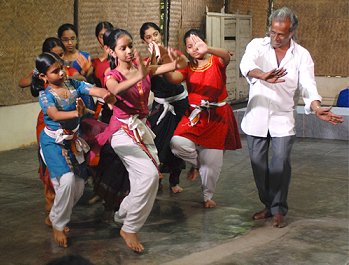 Credits
KSR Anirudha - Production, Concept, Soundscape and Direction
Dr. Kausalya (Retd. Principal of Govt. Music College, Thiruvaiyar) - research
'Manna' Srinivasan – resource guidance
S Rajeshwari (Retd. principal of Govt Music College, Chennai) - music (Carnatic)
V V Ramani - costumes, stage decor and props
Mithran Devanesan - lighting
Purisai K Sambandan - supervision of Theru Koothu
R Thenmozhi Rajendran - supervision of folk dance
Arathi Lakshmi - production coordinator
The show premiers on Sunday, December 9th at Narada Gana Sabha under the auspices of Karthik Fine Arts during the acclaimed December dance and music festival.
The other show dates are:-
| Sl No. | Date | Venue |
| 1 | 12/12/2007 | - Bharatiya Vidya Bhavan |
| 2 | 16/12/2007 | - Brahma Gana Sabha |
| 3 | 26/12/2007 | - Nungambakkam Cultural Academy |
| 4 | 29/12/2007 | - Mylapore Fine Arts |
| 5 | 31/12/2007 | - Bharat Kalachar |
Here is an excerpt of an ineterview with K.S.R. Aniruddha from Kutcheribuzz:-
"You have invested a lot in this production. . .
Yes. It costs about Rs.10 lakhs. Thankfully, we have got some nice sponsors. And since this is not dance but an opera kind of show, we are doing all we can to promote it as such to a larger audience. I have done lots of work in it too – music, composing, choreography, vocals, ideating . . . "
"You have brought dance and theru-koothu and folk arts and drama and western music into the ‘Mammudha’ production. How did that happen?
I was captivated with a show my wife and I saw in Hawaii recently. And it had all the elements that make a good show. That set me going. That’s why ‘Mammudha’ is not a dance or dance drama. It’s a kind of opera. . . I even asked Mom to do theatre adavus. . . I want people to sit through and enjoy every part of it."
Finally to the question in all our minds..Why is the title Mammudha and not Manmatha?
"Because that is how Manmatha is known in my village and most other villages. Temple festivals called Mammudha Vizha are dedicated to him and is still a living tradition in Tamilnadu temples. They know Rathi, but Manmatha is only Mammudha to them. Even in Lavani (folk music and dance of Maharashtra), they refer to him only as Mammudha. Though Manmatha has been portrayed on stage as part of a larger story, this is the first time a total production revolves around him." says Prof. Sudharani Raghupathy
With Inputs from Kutcheribuzz, Narthaki and Shree Bharathalaya's website.


1 comment:
Subhaashitam's review by Chitra Sundaram in The Hindu
There’s a child in every man they say. So Subhaashitam (eternal words of wisdom) based on the Panchatantra, Jataka tales, Tirukkural and Indian folk stories appealed both to the young and old.
After all, it’s not just children who need moral teachings, often elders too have to be reminded of values.
Presented by M.V.Narasimhachari and Vasanthalakshmi, Bharatanatyam and Kuchipudi performers and teachers, ‘Subhaashitam’ scored surely for its theme. In the days of senseless soaps and sleazy film numbers, such closer-to-good-life tales are best prescribed for sullied minds.
Combined effort
It was the combined effort and effect of fine choreography, music (recorded), costume, sets and performance (the boy as a serpent and tiger was amazing) that made the thematic work watchable. There was no element of exaggeration or drama even in the lyrics. Going by the nature of the stories, the words were straight.
The Narasimhacharis, veterans in the field of performing arts, knew well the appeal was in being simple and subtle.
The caricatured version of each story projected on the side screens was as impressive as the enactment on stage.
‘Subhaashitam’ began with an ode to true friendship drawn from ‘Tirukkural’ and then came up with cute little stories on honesty (King and the thief), how one should think twice before they act (Snake and the mongoose), strength of unity (Farmer and his sons) and respecting elders (The clever grandson).
The presentation culminated in Viswasaakshi (the cosmic witness), in which again through a story of a king and his irresponsible subjects people were urged to participate in the progress of society.
Moral: every individual can make a difference.
Post-interval, the production seemed over-stretched. Knowing today’s restless audience, moral lessons for over two hours could be a little too much to gulp down.
Post a Comment